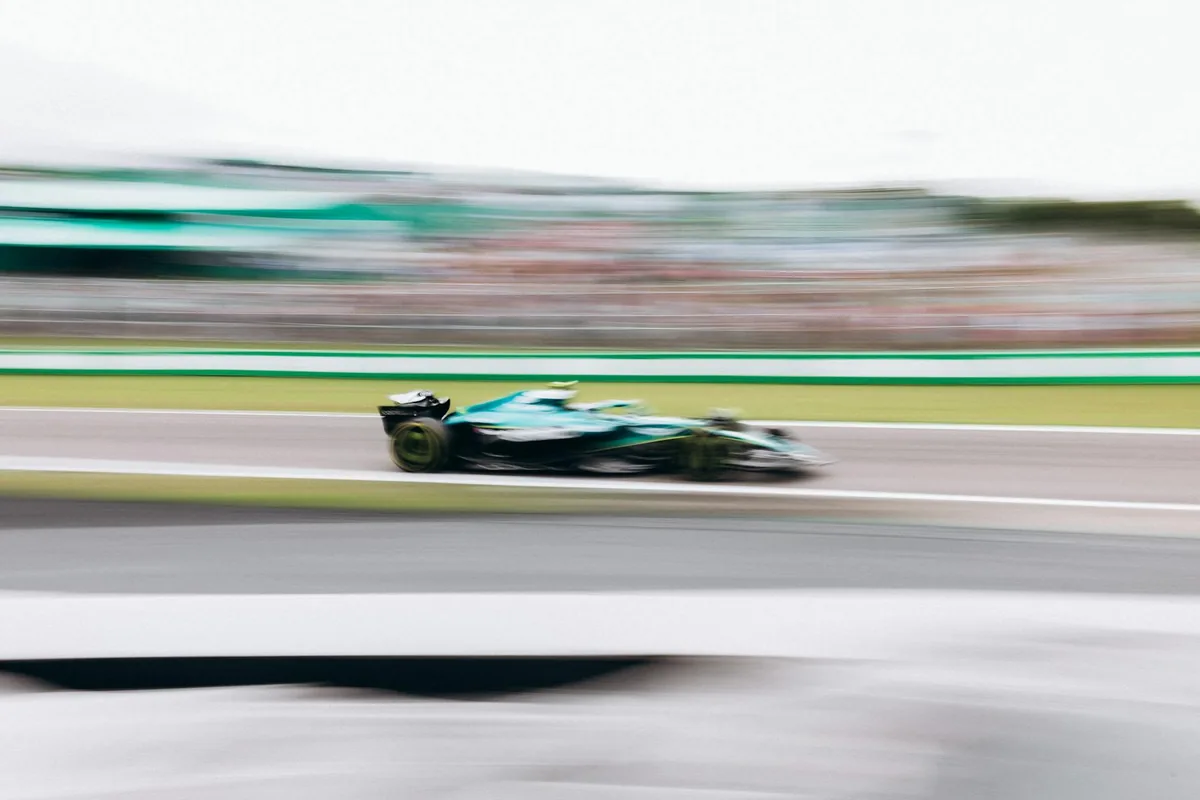
DRS Zone Effectiveness at Silverstone: A Data-Driven Analysis
The Drag Reduction System (DRS) is a pivotal tool in modern Formula 1, designed to promote overtaking by reducing aerodynamic drag on designated straights. At a high-speed, flowing circuit like Silverstone, the placement and effectiveness of DRS zones are critical to race spectacle and strategy. This analysis delves into the data to understand how these zones function at the British Grand Prix, examining their success rates, strategic implications, and how they interact with the circuit's unique characteristics.
Silverstone's DRS Zone Configuration
As of the current configuration, Silverstone features three DRS zones, a setup designed to maximize overtaking opportunities on its long, fast straights. The detection and activation points are strategically placed to create a sequence of potential passing moments.
The primary zone is on the Hangar Straight, with detection just after the high-speed Maggotts-Becketts-Chapel complex. The second zone utilizes the Wellington Straight, starting just after the high-load of the high-speed Copse corner. The third and often most decisive zone is on the pit straight, with detection positioned after the final complex of corners. This multi-zone setup creates a "chain" effect, where a car gaining an advantage in one zone can carry that momentum into the next, a critical factor in analyzing overtaking opportunities at Silverstone.
Quantifying Overtaking Success
Historical race data provides clear evidence of the DRS zones' impact. Statistical analysis of recent British Grands Prix reveals that the majority of overtakes for position occur within these designated areas. The pit straight zone typically sees the highest volume of completed passes, owing to its position after the final corner where following cars can be closest. However, the effectiveness is not uniform.
Hangar Straight vs. Wellington Straight
Data shows the Hangar Straight zone has a slightly lower success rate for a clean overtake into Stowe corner compared to the Wellington Straight zone into Brooklands. The reason is often aerodynamic. Cars exit the incredibly fast Maggotts-Becketts sequence with significant downforce load and turbulence, which can disadvantage the following car at the detection point. The Wellington Straight, following the slightly slower but still challenging Copse, often provides a more stable platform for the pursuing car to be within the one-second window at detection.
This interplay between cornering performance and straight-line speed is a key component of Silverstone aerodynamics setup, where teams must find a balance between maximum downforce for the corners and a low-drag configuration for the DRS zones.
Strategic and Tactical Implications
The presence of multiple DRS zones fundamentally alters race strategy. It influences decisions on tyre management, pit stop timing, and in-race positioning.
- Defensive Positioning: Drivers ahead know that being within one second of another car at multiple detection points can leave them vulnerable. This often leads to strategic lifting before detection zones to break the tow, a delicate dance between losing time and protecting position.
- Pit Stop Undercuts/Overcuts: The effectiveness of an undercut (pitting earlier) is amplified at Silverstone because a driver on fresh tyres can exploit the DRS zones to overtake cars that have yet to pit, even if they are physically ahead on track when they exit the pits. Conversely, a successful overcut relies on managing tyres to be strong in the laps after a competitor pits, using DRS to defend once ahead.
- Qualifying Importance: Starting position remains crucial. Being ahead after the first lap means having control over the DRS detection points, making it significantly harder for cars behind to mount an attack, despite the zones' presence.
These strategic layers are deeply connected to Silverstone tyre strategy, as tyre wear directly impacts a car's ability to follow closely through corners and capitalize on DRS.
External Factors Influencing DRS Performance
The raw data on DRS effectiveness cannot be viewed in isolation. Several circuit-specific and environmental factors modulate its impact.
- Wind: Silverstone is notoriously windy. A strong headwind on a DRS straight reduces the top-speed benefit of an open rear wing, while a tailwind amplifies it. This variable, explored in our guide on how weather affects racing at Silverstone, can unpredictably alter the effectiveness of a DRS attack from lap to lap.
- Car Performance Differential: DRS is most effective when cars are closely matched. If one car has a significant straight-line speed advantage even without DRS, the system can create "easy" passes. Conversely, if a following car is aerodynamically inefficient or down on power, even DRS may not be enough to facilitate an overtake.
- Track Evolution and Surface: As rubber is laid down over the weekend, grip levels increase. This can affect how closely a car can follow through the preceding corners, thereby influencing the chance of being within the one-second window at the detection point. The unique properties of the track surface play a role, as detailed in our Silverstone track surface analysis.
Comparison and Evolution
Silverstone's DRS configuration has evolved. Initially, with only one or two zones, overtaking was more challenging. The introduction of a third zone significantly increased overtaking data. When compared to other circuits, Silverstone's zones are among the most powerful due to the lengths of the straights. According to the FIA's official data, the speed differential gained at Silverstone is often greater than at slower, tighter circuits.
The circuit's layout, a product of significant modifications through history, is inherently conducive to DRS. The long straights that followed re-profiling work in the 1990s and 2010s created the perfect canvas for the system's introduction. Furthermore, the FIA continuously reviews zone effectiveness. As part of broader safety and sporting considerations, detection points can be moved to ensure overtaking is possible but not excessively "easy," maintaining a sporting challenge.
Conclusion: A Key Ingredient in the Silverstone Spectacle
Data conclusively shows that DRS zones are highly effective at Silverstone, transforming what could be a processional race at a high-speed circuit into a dynamic battle of strategy and skill. Their success is not merely a function of the straights themselves but a complex equation involving preceding corner sequences, car setup, tyre management, and even the British weather. While the system provides a crucial tool for overtaking, it ultimately complements rather than overrides the core skills of the driver and team. The strategic use of DRS at Silverstone remains one of the most intricate and fascinating aspects of the British Grand Prix weekend, ensuring the historic circuit continues to deliver thrilling, wheel-to-wheel action.
For a deeper understanding of the track these zones operate on, explore our corner-by-corner analysis of the Silverstone layout.