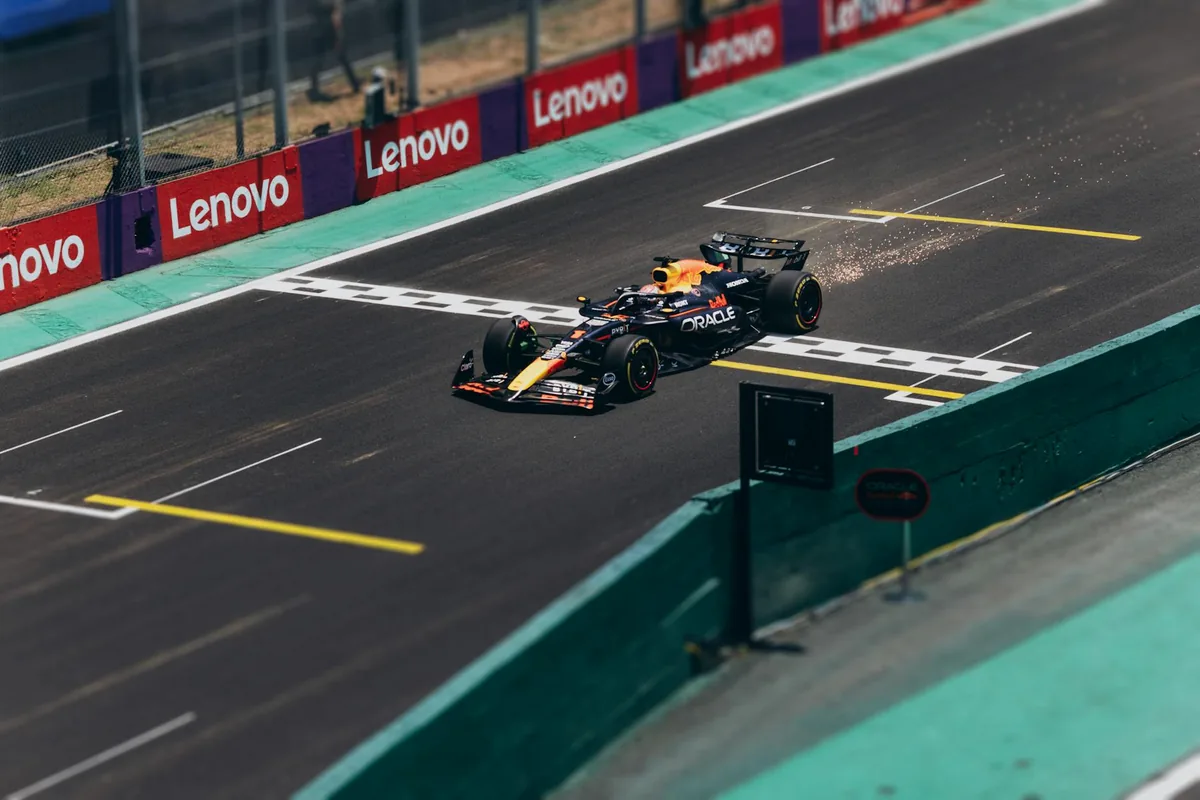
Power Demands: Engine Performance Requirements at Silverstone
The Silverstone Circuit is a true power circuit, a relentless test of an engine's performance, reliability, and efficiency. Unlike tight, twisting tracks, Silverstone's long straights and fast, flowing corners place immense demands on a Formula 1 car's power unit, making it a critical differentiator between victory and defeat. Success here hinges not just on outright horsepower but on a complex balance of energy deployment, thermal management, and drivability across its unique corner-by-corner layout.
The Anatomy of a Power Circuit
Silverstone's character as a high-speed, high-load circuit is defined by its history and geography. Originally a WWII airfield, its long runways formed the basis of a track built for speed. Modern modifications have retained this essence, creating a layout where cars spend approximately 70% of a lap at full throttle. This creates a unique set of challenges for the hybrid power unit, which comprises the internal combustion engine (ICE), Motor Generator Unit-Kinetic (MGU-K), Motor Generator Unit-Heat (MGU-H), Energy Store (ES), and Control Electronics.
The key factor is sustained load. Through corners like the high-G Maggotts-Becketts-Chapel complex, the engine must maintain consistent power delivery while under extreme lateral forces. Any hesitation or power dip can cost crucial tenths. Similarly, the exit onto the Hangar Straight and the run from Stowe to Vale demand explosive acceleration, testing the immediate torque response from the combined ICE and electrical systems.
Specific Corners and Straights: Where Power is Paramount
Breaking down the circuit reveals specific zones where engine performance is non-negotiable.
The Wellington Straight and Brooklands Complex
Following the slow-speed Luffield corner, the exit onto the Wellington Straight is all about traction and early acceleration. A powerful, responsive engine helps the car squirt onto the straight, building speed for the heavy braking zone into Brooklands. Efficient energy recovery under braking here is crucial to recharge the battery for later deployment.
Maggotts, Becketts, and Chapel
This legendary sequence is a dance of precision and power. While aerodynamics and mechanical grip are vital, the engine must deliver smooth, progressive power through the rapid directional changes. Any turbo lag or erratic power delivery can upset the car's balance, leading to a loss of momentum that carries all the way down the Hangar Straight—one of the track's primary overtaking hotspots.
The Hangar Straight and Stowe
The Hangar Straight is the longest flat-out section, where top speed and power unit efficiency are tested. Teams run a low-downforce setup to maximize straight-line speed, placing even greater emphasis on the engine's pure horsepower. The end of the straight leads into the demanding Stowe corner, a high-speed right-hander where drivers must balance braking and throttle application, relying on stable engine mapping.
The Hybrid System's Role: Energy Management is Key
At Silverstone, the strategic use of the Energy Recovery System (ERS) is as important as the internal combustion engine's power. The MGU-K, which harvests energy under braking and deploys it as a power boost, is used aggressively. Drivers and engineers must decide where to deploy the limited electrical energy for maximum lap time gain—typically on exits onto long straights to maximize top speed.
The MGU-H, which recovers energy from the turbocharger's heat, plays a critical role in mitigating turbo lag. Through Silverstone's fast corners, maintaining boost pressure is essential for immediate throttle response. A well-integrated MGU-H ensures the turbo is always spooled, providing seamless power delivery. This complex fuel and energy strategy is a high-wire act between performance and conservation over a race distance.
Thermal Challenges and Reliability
Sustained high engine loads generate enormous heat. Silverstone's power units operate at their thermal limits for much of the lap. Cooling is a major compromise; larger radiator inlets improve cooling but increase aerodynamic drag, reducing top speed on the straights. Teams must find a setup that prevents overheating without sacrificing too much straight-line performance.
Reliability under this stress is paramount. A power unit failure at Silverstone's high speeds can have serious consequences, underscoring the importance of the circuit's continuous safety feature innovations. The strain on all internal components—from pistons and crankshafts to the hybrid system's electronics—is extreme, making Silverstone a common venue for engine-related retirements if durability is marginal.
Evolution of Power Demands Through the Eras
The engine requirements at Silverstone have evolved dramatically. In the normally-aspirated V10 and V8 eras, the focus was purely on high-revving horsepower and reliability. The introduction of the turbo-hybrid V6 regulations in 2014 added the layer of complex energy management. According to analysis from the Fédération Internationale de l'Automobile (FIA), the sport's governing body, modern power units now achieve over 50% thermal efficiency, a testament to the engineering focus on extracting maximum work from fuel and energy. You can explore the FIA's technical regulations and insights on power unit development on their official technical pages.
This evolution is reflected in the lap record evolution, with times tumbling as power and efficiency have grown. Furthermore, changing weather conditions, particularly cooler temperatures, can affect engine performance and cooling requirements, adding another variable for teams to manage.
Conclusion: The Ultimate Power Test
Silverstone remains one of the definitive benchmarks for Formula 1 engine performance. It rewards power units that deliver not just peak horsepower, but also seamless drivability, intelligent energy deployment, and bulletproof reliability under sustained duress. The battle at the British Grand Prix is often won by the team that best optimizes this intricate package, mastering the trade-offs between power, cooling, and efficiency. For engineers and drivers, conquering Silverstone's power demands is a clear sign of a championship-caliber operation, a fact underscored by the detailed telemetry and data analytics that shape every decision on race weekend. For further technical analysis on modern F1 power units, authoritative resources like Motorsport.com's technical section provide in-depth explanations of the technology powering these incredible machines.