How Data Analytics Shapes Silverstone Race Strategy
At the heart of every modern British Grand Prix at Silverstone is a relentless torrent of data. Race strategy is no longer a gut feeling or a simple calculation; it is a sophisticated, real-time science driven by advanced data analytics. Every millisecond of a lap, every degree of tire temperature, and every gust of wind is captured, analyzed, and turned into a competitive advantage. This article explores how teams harness this digital deluge to craft the winning strategies that define races at this iconic circuit.
The Data Ecosystem: From Car to Cloud
Modern Formula 1 cars are essentially data centers on wheels. During a Silverstone weekend, each car generates over a terabyte of data, streaming thousands of channels of information via high-speed telemetry. This includes engine parameters, gearbox loads, brake temperatures, suspension movements, and aerodynamic performance. Crucially, it also encompasses driver biometrics and precise GPS positioning. This data is transmitted in real-time to the pits and then to team factories, where powerful servers and algorithms process it instantly. The goal is to create a complete digital twin of the car and its environment, allowing strategists to simulate countless race scenarios before making a call.
Key Data Points Collected at Silverstone
- Tire Wear and Temperature: Sensors inside the tires monitor wear rates and heat across the tread, critical for predicting pit stop windows on Silverstone's abrasive surface.
- Aero Performance: Data on downforce and drag, especially sensitive to the circuit's famous high-speed corners like Copse and Maggots/Becketts.
- Fuel Consumption: Precise flow meters track usage, enabling teams to balance performance with the mandatory fuel limit.
- Track Conditions: Data on grip levels, track evolution, and even moisture from forward-facing cameras and other sensors.
Strategic Decision-Making in Real Time
The true test of data analytics comes on race day. Strategists are no longer reacting to events; they are predicting them. Advanced models process live data against pre-race simulations to answer pivotal questions. Should we pit early to undercut a rival? Can this tire compound last another five laps? How will a change in weather at Silverstone affect our plan?
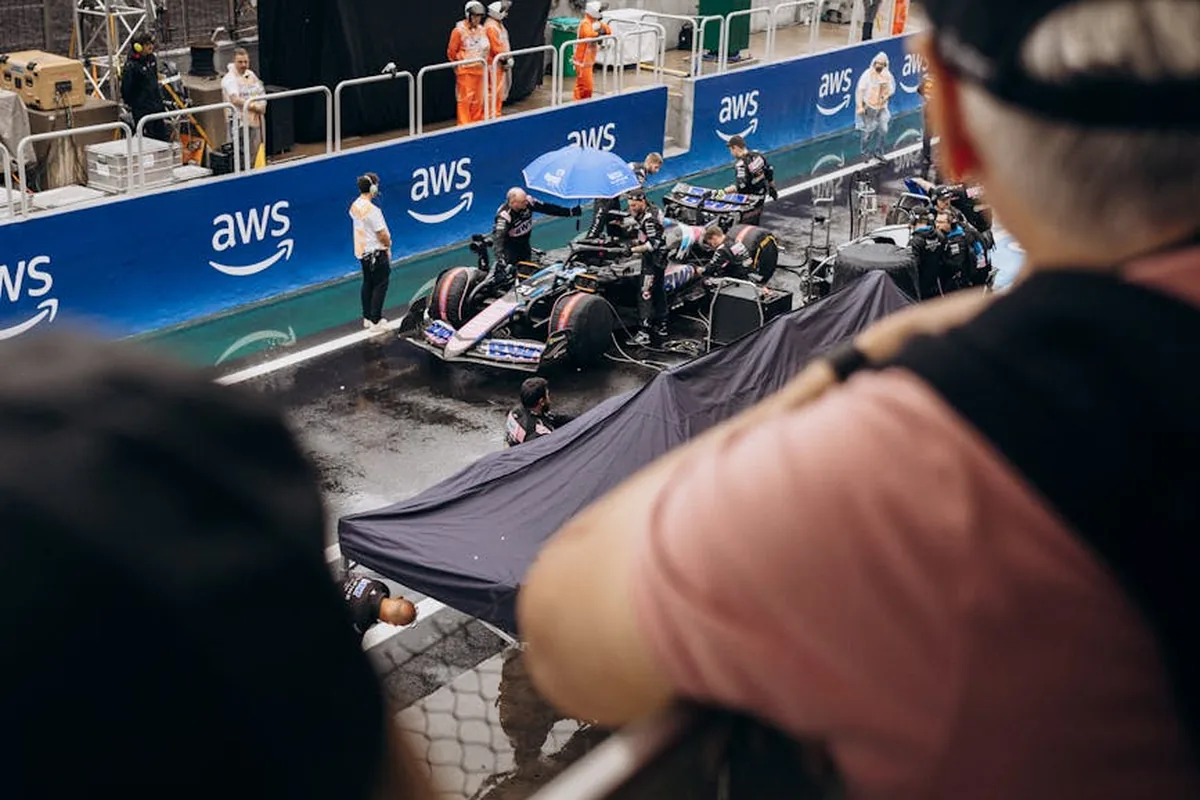
For instance, real-time tire data might show higher degradation than expected. Analytics software can immediately compare this to the degradation of competitors (inferred from lap time trends and visible tire condition) and calculate the optimal lap to pit, often to the precise lap. This was famously seen in races where a well-timed "undercut" at Silverstone's demanding pit lane sequence has decided the winner. The operations inside Silverstone's pit lane are the physical execution of these data-driven commands, where milliseconds saved are a direct result of predictive analytics.
Simulation and Predictive Modelling
Long before the cars take to the track, teams have run millions of simulated laps. Using detailed digital models of the Silverstone track layout, they test thousands of strategic variables: different tire compounds, fuel loads, pit stop laps, and overtaking opportunities. These models are calibrated with historical data from previous years and updated with real-time data from practice sessions. This allows teams to create a "strategy tree," mapping out the probable outcome of every conceivable decision path. When an event like a Safety Car occurs, teams can instantly call up their pre-modeled scenarios for that exact lap and make a decision within seconds.
Weather: The Ultimate Variable
Perhaps no factor is more data-intensive at Silverstone than the weather. The circuit's exposed location makes conditions notoriously fickle. Teams integrate hyper-local weather forecasting—using on-site weather stations, radar, and even satellite data—into their strategic models. Predictive analytics can estimate how a rain shower will affect different parts of the track, when the crossover point for switching to intermediate tires will be, and how this will shuffle the competitive order. This turns a potential lottery into a calculated risk.
The Human Element in a Data-Driven World
Despite the overwhelming role of data, the human element remains irreplaceable. The race engineer and driver form a crucial feedback loop. Data might suggest a tire is failing, but the driver's feel through the steering wheel provides the final confirmation. Similarly, a strategist must interpret the cold numbers with an understanding of racecraft, competitor psychology, and the intangible "flow" of a Grand Prix. The driver's ability to manage tires and fuel based on dashboard instructions—a direct output of the data strategy—is a key skill. Insights from team radio communications at Silverstone often reveal this critical dialogue between data and driver instinct.
The Future: AI and Machine Learning
The next frontier at Silverstone and beyond is the increasing use of artificial intelligence and machine learning. These systems can identify patterns in vast datasets that humans might miss, suggesting novel strategic approaches. AI could optimize energy deployment in hybrid power units corner-by-corner or predict component failures before they happen. As these technologies mature, the speed and accuracy of strategic decisions will reach new heights, making the race for data supremacy as intense as the battle on the asphalt.
The role of data analytics is a perfect example of the sport's evolution in the 21st century. For those interested in the technical foundations that make this possible, the FIA's official website provides detailed regulations on data transmission and software standards in Formula 1. Furthermore, research into real-time data processing in motorsport from institutions like the Institution of Mechanical Engineers offers deeper academic insight.
Conclusion
Victory at the British Grand Prix is no longer won by the fastest car alone. It is secured by the team that best captures, interprets, and acts upon the ocean of data flowing from the circuit. From predictive tire models to real-time weather integration, data analytics has transformed Silverstone's race strategy from an art into a precise science. As the cars scream through Copse Corner, it's not just horsepower propelling them forward, but billions of data points, meticulously analyzed, shaping every overtake, every pit stop, and ultimately, the checkered flag.