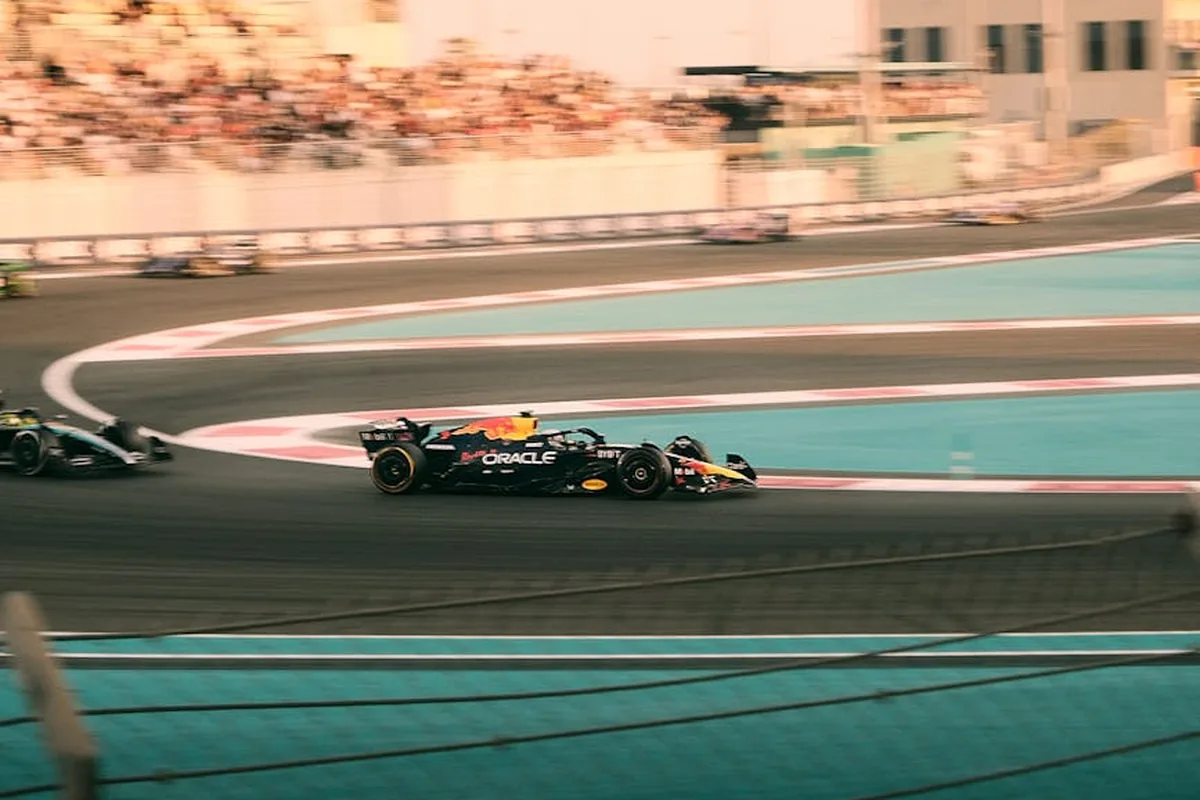
Suspension Setup: Optimizing for Silverstone's Bumps
Mastering the Silverstone Circuit requires more than just power and aerodynamic efficiency; it demands a suspension system meticulously tuned to handle its unique and demanding surface. The high-speed sweeps and aggressive direction changes that define the Silverstone track layout place immense loads on a car, but it is the circuit's notorious bumps and kerbs that present the ultimate challenge for engineers. Optimizing the suspension for these imperfections is a critical compromise between mechanical grip, aerodynamic stability, and driver confidence.
The Nature of Silverstone's Surface
Silverstone is a circuit born from a WWII airfield, and its character is intrinsically linked to its history and the local geology. While extensive resurfacing projects have occurred over the decades, as detailed in our article on track surface evolution, the underlying ground and the immense forces exerted by modern Formula 1 cars create a living, breathing track. Key areas like the exit of Copse, the approach to Maggotts, and the Wellington Straight are known for their specific bumps and surface undulations. These imperfections can upset the car's balance, causing a loss of aerodynamic platform (as the ride height changes unpredictably) and challenging the driver's ability to place the car with millimetric precision.
Primary Bump Challenges
Engineers focus on several high-load zones where suspension performance is paramount. The compression through the high-speed Becketts complex tests the car's ability to maintain a stable platform while rapidly changing direction. Similarly, the kerbs at Chapel and the exit of Stowe are often used to straight-line the corner and gain time, but they transmit huge shocks through the chassis. A poorly damped car will bounce, lose traction, and potentially sustain damage. Understanding these specific demands is crucial, which is why a complete guide to the circuit provides essential context for any technical setup discussion.
The Engineering Compromise: Stiffness vs. Compliance
The core dilemma for any race engineer at Silverstone is balancing stiffness and compliance. A stiff suspension setup minimizes chassis roll and pitch, keeping the aerodynamic surfaces operating at their optimal ride height and angle. This is vital for generating consistent downforce through corners like Copse and Maggotts. However, an overly stiff car will skip over bumps rather than absorbing them, reducing tyre contact patch and mechanical grip, especially under braking and initial turn-in.
Conversely, a more compliant, softer setup allows the wheels to follow the contour of the track surface better, maintaining grip over bumps. The trade-off is increased chassis movement, which can destabilize the aerodynamic flow and make the car feel less precise and more sluggish in direction changes. The ideal setup finds a "sweet spot" where the car is just compliant enough to manage the worst bumps without sacrificing too much aero performance. This compromise is further influenced by weather conditions, as a cooler track offers less inherent grip, sometimes pushing teams towards a slightly softer mechanical setup.
Key Suspension Components in Focus
- Dampers (Shock Absorbers): These are arguably the most critical component for Silverstone. High-speed damping control is essential to prevent the car from oscillating after hitting a bump at 300 km/h. Engineers spend countless hours tuning bump (compression) and rebound settings to control the wheel's movement precisely.
- Spring Rates: Spring stiffness is chosen based on the required level of compliance and the target aerodynamic ride height. At Silverstone, teams often run medium-to-high spring rates to cope with the high-speed corners, but may soften the heave springs (which control vertical movement) to aid kerb absorption.
- Anti-Roll Bars: These tune the car's balance between understeer and oversteer. A stiffer front anti-roll bar can improve turn-in response but may make the car more nervous over bumps on corner entry. The choice here is intimately linked to driver preference and tyre management.
Interaction with Tyres and Aerodynamics
Suspension does not work in isolation. Its setup has a direct and profound impact on both tyre performance and aerodynamic efficiency. A car that is too harsh over bumps will cause the tyres to "chatter," creating inconsistent temperatures and increasing wear. This can devastate a tyre strategy built on a one-stop race. Furthermore, as the car bounces, the critical floor and diffuser ride height fluctuates, causing a loss of downforce exactly when the driver needs it most—in the middle of a high-speed corner.
Modern F1 cars use sophisticated hydraulic or inerter systems within their suspension to help manage this. These systems can provide resistance to high-frequency movements (like those from bumps) without affecting the lower-frequency roll and pitch the car experiences during normal cornering and braking. This technology is key to maintaining an aerodynamic platform over Silverstone's uneven surface while still allowing the car to be mechanically drivable.
Data and Simulation: The Modern Setup Toolbox
Gone are the days of relying solely on driver feel and engineer intuition. Today, teams arrive at Silverstone with a virtual car model that has been simulated over a laser-scanned digital version of the track, complete with its exact bump profile. This allows engineers to model thousands of setup permutations before the wheels even turn. During practice sessions, data telemetry from accelerometers and position sensors provides real-time feedback on how the car is interacting with the track. Engineers can see precisely which corners are causing the most suspension travel and adjust accordingly.
The driver's feedback remains invaluable, describing the car's behavior in subjective terms like "nervous," "bouncing," or "bottoming." The engineer's skill lies in translating that feedback into objective changes to damper settings, spring rates, or ride heights. This collaborative, data-informed process is what allows teams to hone their setup throughout a race weekend.
Conclusion: The Quest for the Perfect Platform
Optimizing suspension for Silverstone's bumps is a relentless pursuit of a stable platform. It is a complex equation where mechanical sympathy meets aerodynamic necessity. The teams that succeed are those that best integrate their suspension tuning with their overall car philosophy, tyre management plan, and aerodynamic concept. It's a technical battle fought over millimeters of ride height and thousandths of a second in damper response, all in service of taming one of the world's most historic and challenging circuits. For those interested in the broader technical marvels of the venue, our exploration of Silverstone's engineering marvels offers further insight. To understand the principles of vehicle dynamics in more depth, authoritative resources like the Society of Automotive Engineers (SAE) and technical publications from FIA provide essential foundational knowledge.