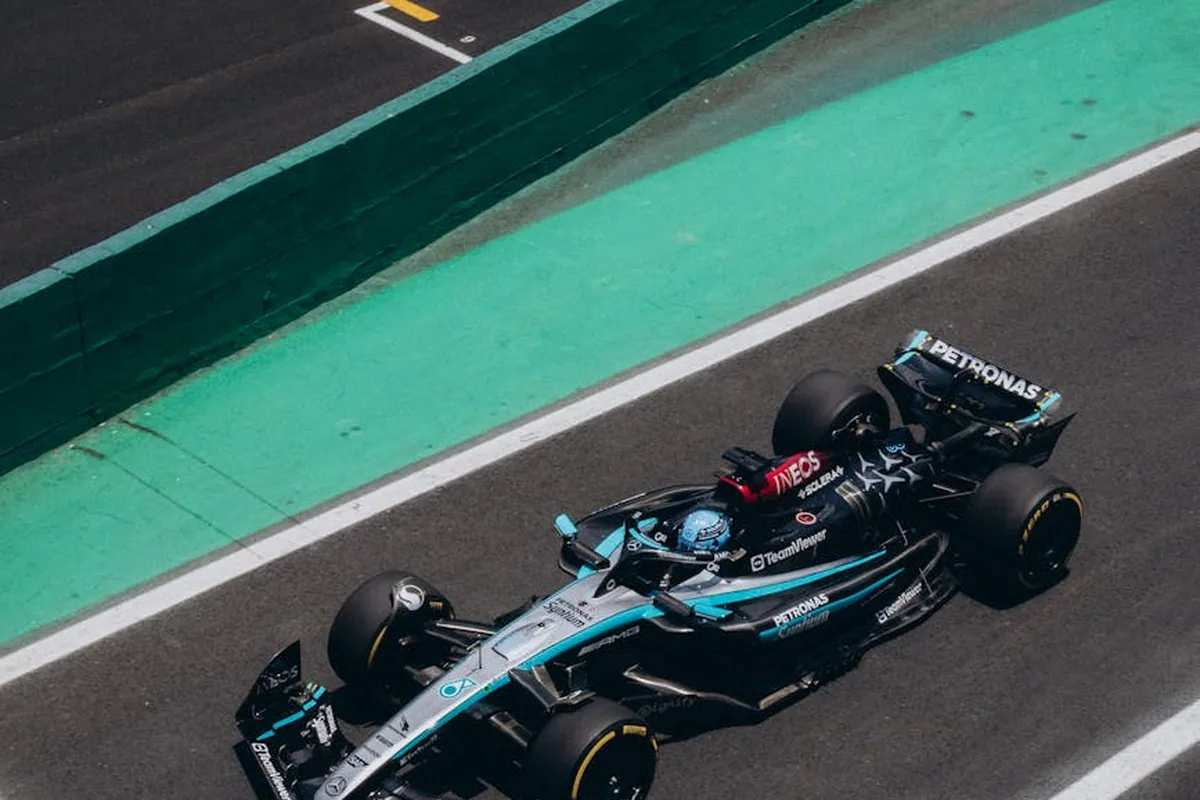
Riding the Curves: Suspension Setup Analysis for Silverstone
Silverstone Circuit is a true test of a Formula 1 car’s suspension. Its unique blend of high-speed sweeps, punishing kerbs, and variable surface conditions demands a setup that is both supremely stiff for aerodynamic stability and sufficiently compliant to handle the bumps. Finding this balance is the central challenge for every team’s engineers at the British Grand Prix. A perfect suspension setup maximizes mechanical grip, maintains optimal aerodynamic platform, and gives the driver the confidence to attack the circuit's legendary corners.
The Core Challenge: High-Speed Stability vs. Mechanical Grip
Silverstone is predominantly a high-downforce, high-speed circuit. Corners like Maggotts, Becketts, and Chapel form a relentless sequence where the car is subjected to massive lateral forces. Here, suspension stiffness is paramount. A stiff setup minimizes chassis roll and pitch, keeping the aerodynamic surfaces—the front wing and floor—at their designed ride height and angle. This ensures consistent downforce generation, which is critical for maintaining speed through these curves. However, Silverstone is not a billiard-smooth track. The surface features bumps and undulations, particularly through sections like the Wellington Straight and into Brooklands. A setup that is too stiff will cause the car to skip over these imperfections, losing mechanical grip and making it a handful for the driver. The art lies in tuning the suspension’s stiffness and damping to absorb these disturbances without sacrificing the aero platform.
Corner-by-Corner Suspension Demands
A detailed look at key sections reveals the nuanced requirements placed on the suspension system. For a complete breakdown of each turn, our Silverstone Track Layout: Corner-by-Corner Analysis provides essential context.
Coping with Copse, Maggotts, and Becketts
The opening complex, starting with the flat-out Copse corner, immediately tests front-end stiffness. The car must turn in with minimal compliance to avoid understeer at nearly 290 km/h. Through the Maggotts-Becketts sequence, the suspension is constantly loaded and unloaded as the car flicks from left to right. Here, damping is as crucial as spring stiffness. The dampers must control the weight transfer instantaneously, preventing the car from becoming unsettled. Any oscillation or loss of platform here costs precious tenths and can lead to a loss of control.
Handling the Kerbs at Chapel and Stowe
While high-speed stability is key, mechanical grip is vital for traction out of slower corners. The exit of the Chapel curve and the entry to Stowe require the car to use aggressive kerbing to straighten the line and carry more speed. A suspension that is too stiff will cause the car to bounce violently over these kerbs, breaking traction. Teams often run slightly softer settings here or employ advanced heave springs and third-element dampers that allow for controlled vertical movement over large impacts while maintaining lateral stiffness. The evolution of these kerbs and track surfaces is detailed in our article on How Silverstone Circuit Has Changed: Major Modifications Through History.
External Factors Influencing Setup
Suspension strategy is never decided in a vacuum. Two critical external factors at Silverstone profoundly influence the final setup choices.
The Wind Variable
Silverstone is famously exposed, making wind a significant and unpredictable player. A strong crosswind through the high-speed sections can destabilize the car, requiring a setup that may trade some ultimate downforce for drivability. Teams use adjustable elements like front wing flap angles and brake balance to compensate in real-time, but the underlying suspension stiffness must provide a stable enough base for the driver to feel the car’s limits. The impact of these conditions is explored further in our guide on How Weather Affects Racing at Silverstone: Rain, Wind & Temperature.
Tyre Management and Suspension
Suspension setup is intrinsically linked to tyre performance. The high-energy loads through Silverstone’s long corners, particularly the right-handers, put immense stress on the front-left tyre. A suspension that is too aggressive on the kerbs can cause excessive tyre vibration and overheating, leading to premature wear or even blistering. Engineers must find a setup that is easy on the tyres over a stint while still providing the sharp response needed for a single qualifying lap. For a deeper dive into this critical aspect, see our Tyre Strategy at Silverstone: Pirelli's Challenge.
The Setup Compromise: Qualifying vs. Race
The ultimate suspension configuration is always a compromise, and this is most starkly seen between qualifying and the race. For a single lap in Q3, teams will opt for the stiffest possible setup to maximize aero performance and cornering speeds, accepting that the car will be twitchy and difficult over the bumps and kerbs. For the race, however, durability and consistency are key. The setup will be softened slightly to improve mechanical grip, protect the tyres over a long stint, and make the car more predictable for the driver over 52 laps. This race setup must also account for changing fuel loads, which significantly alter the car’s weight and balance.
Modern F1 suspension systems are marvels of engineering, featuring multi-link arrangements, torsion bars, and sophisticated hydraulic components. Teams like Mercedes and Red Bull have invested heavily in advanced kinematic and compliance analysis to perfect their setups. Furthermore, understanding the fundamental principles of vehicle dynamics, as outlined by authoritative engineering resources like the SAE International, provides the theoretical backbone for these practical decisions.
Conclusion: The Never-Ending Pursuit of Balance
Mastering Silverstone’s suspension setup is a relentless pursuit of balance. It requires harmonizing conflicting demands: stiffness for aerodynamics versus compliance for grip; single-lap peak performance versus race-long tyre management; and mechanical predictability versus adaptability to changing conditions. The team that best interprets the data from practice sessions, understands the nuances of the Silverstone Track Surface, and gives their driver a car that inspires confidence through Copse and Becketts will have a formidable advantage. At the British Grand Prix, victory is not just about power and downforce, but about perfectly tuning the mechanical connection between car and track.