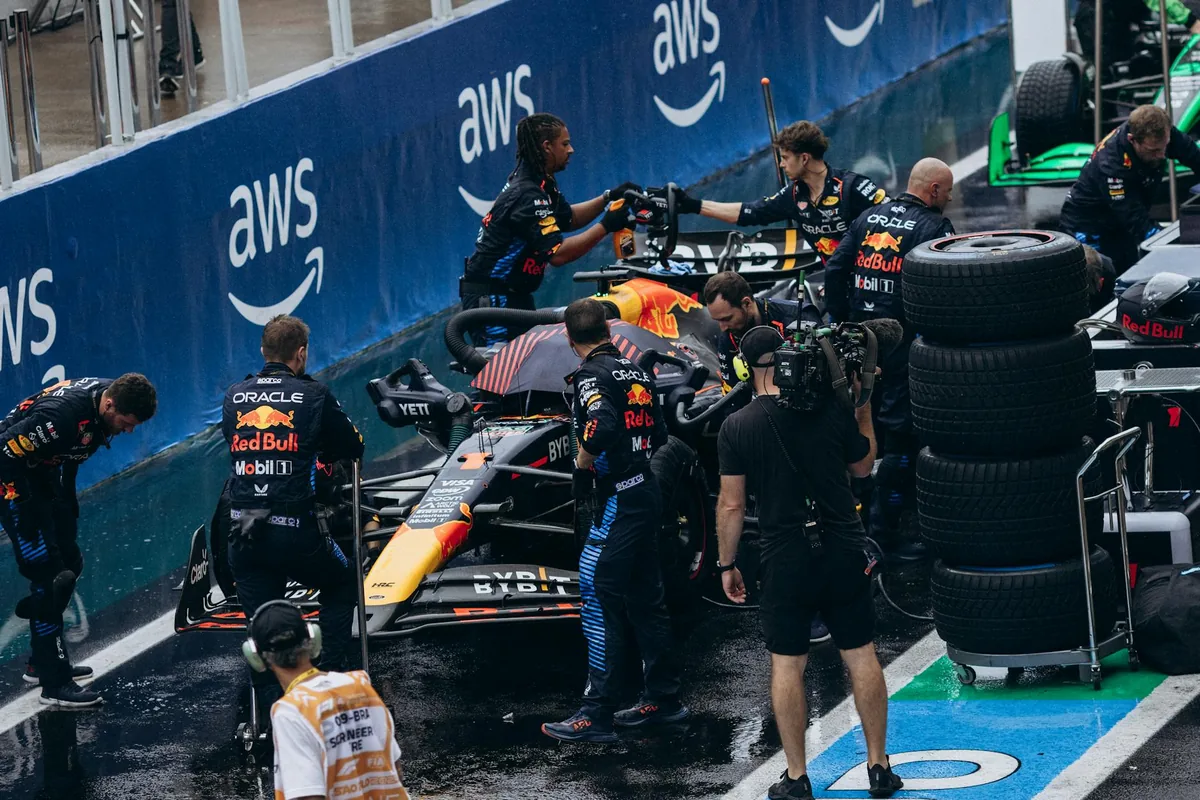
Gearbox Performance Analysis at Silverstone Circuit
The Silverstone Circuit is a supreme test of a Formula 1 car's entire mechanical package, and the gearbox is one of its most critical and stressed components. More than just a device for changing gears, the modern F1 gearbox is a seamless-shift, carbon-fiber-clad marvel of engineering that must withstand immense forces while delivering millisecond-perfect shifts lap after lap. At a high-speed, flowing track like Silverstone, gearbox performance is intrinsically linked to lap time, reliability, and ultimately, race success.
This analysis delves into the unique demands Silverstone places on an F1 gearbox, examining shift patterns, thermal management, and the engineering solutions teams deploy to conquer this iconic British circuit.
The Demands of Silverstone's Layout
To understand gearbox stress, one must first understand the track. Silverstone's modern configuration is a series of fast, sweeping corners and high-speed directional changes. The circuit's character, born from its history of construction and major renovations, has evolved into a layout that prioritizes aerodynamic efficiency and mechanical grip through rapid transitions.
The first sector, from Abbey through to Brooklands, is particularly brutal. After the flat-out run down the Wellington Straight, drivers brake hard and downshift rapidly for the slow, complex Brooklands-Luffield-Woodcote sequence. This is immediately followed by the explosive acceleration onto the old pit straight, now part of the track, demanding a rapid upshift sequence. The gearbox must handle this sharp contrast between high-speed stability and low-speed, sequential shifting under heavy load.
Furthermore, the relentless nature of corners like Maggotts, Becketts, and Chapel—a high-speed esses section taken at near-full throttle—means the gearbox is constantly managing lateral G-forces. The internal components, including the gear clusters, shafts, and differential, are subjected to significant bending and torsional stresses. For a detailed look at each challenging section, our Silverstone track layout corner-by-corner analysis provides deeper insight.
Shift Patterns and Gear Selection
At Silverstone, drivers will use every ratio in their eight-speed gearbox. The selection of gear ratios for the weekend is a critical strategic decision, balancing top speed on the long straights (like the new run from Abbey to Farm) with acceleration out of medium and low-speed corners.
High-Speed Corners and Sustained Load
Through the Maggotts-Becketts complex, shifts are minimal. Drivers may only make one or two upshifts, holding a high gear (often 6th or 7th) through the entire sequence. The focus here is on maintaining seamless power delivery and stability. The gearbox differential, which manages the speed difference between the driven wheels, is crucial here for balanced turn-in and traction.
Heavy Braking and Downshift Sequences
The most demanding moments for the gearbox's shift mechanisms are the heavy braking zones. At the end of the Hangar Straight, approaching Stowe Corner, drivers brake from over 330 km/h down to around 130 km/h. In less than two seconds, the gearbox must execute five or six perfect downshifts. Each shift involves precise clutchless engagement (managed by the onboard computer) while the car is under severe deceleration forces. Any hesitation or imperfection here can destabilize the car or lead to missed apexes.
Thermal Management and Reliability
Heat is the enemy of all precision machinery, and gearboxes are no exception. The combination of high rotational speeds, friction between gear teeth, and the work of the differential generates enormous heat. Silverstone's fast nature means the gearbox is under load for a high percentage of the lap, allowing less time for cooling compared to stop-start circuits.
Teams employ sophisticated cooling solutions, often using dedicated gearbox oil coolers fed by airflow from sidepod or rear bodywork inlets. The oil itself is a specialized fluid designed to maintain viscosity and lubricating properties under extreme temperatures and shear forces. Managing this thermal load is a key part of pit lane operations and strategy, as overheating can lead to catastrophic failure or enforced performance reductions.
Reliability is paramount. According to the FIA sporting regulations, gearboxes must last six consecutive events. A failure at Silverstone could not only ruin a race but also incur grid penalties for the following event. The high-speed loads make Silverstone a common circuit for gearbox-related retirements if components are near their life limit.
Engineering and Material Innovations
To meet these demands, F1 gearboxes are constructed from carbon fiber composite casings for extreme lightness and stiffness. The internal gears are typically made from ultra-high-strength steel alloys, case-hardened and finished to microscopic tolerances. The shift mechanism is primarily hydraulic, controlled by the car's Energy Recovery System (ERS) for lightning-fast actuation.
The differential is increasingly electronic and programmable. Engineers can adjust its locking characteristics for different corners, fine-tuning the car's balance. For Silverstone, a setup that allows a more progressive differential unlock on corner entry can aid rotation through fast sweeps like Copse, while a tighter setting may be preferred for the traction zones out of Luffield or Village.
This relentless pursuit of performance and reliability is part of the broader engineering marvels behind the scenes at every Grand Prix. The gearbox is a perfect example of a component where marginal gains in shift speed, weight reduction, or cooling efficiency can translate to tangible lap time benefits.
The Impact of External Factors
Gearbox performance does not exist in a vacuum. It is significantly influenced by two key external factors at Silverstone:
- Weather: A wet or cool race dramatically changes the thermal equation. Less engine power and lower tire grip reduce the overall load on the gearbox, but teams must be cautious of "pick-up" – rubber and debris collecting in cooling inlets. Conversely, a hot track increases thermal stress. The unpredictable weather conditions at Silverstone add another layer of complexity to gearbox management.
- Track Surface: The specific asphalt composition and its level of abrasiveness affect tire wear and, consequently, traction. Wheelspin on exit, even minimal, creates additional shock loads through the drivetrain into the gearbox. The evolution of the track surface at Silverstone has directly influenced car setup, including gearbox differential maps.
Conclusion: A Symphony of Precision
At the Silverstone Circuit, the gearbox performs a symphony of precision under fire. It must execute hundreds of flawless shifts per race while enduring extreme forces and temperatures. Its performance is a direct result of meticulous pre-event analysis, robust engineering, and real-time strategic management from the pit wall. In the relentless pursuit of victory at the British Grand Prix, a gearbox that is both fast and reliable is not just an advantage—it is an absolute necessity. The continuous development in this area, from materials to software, ensures that the gearbox remains a pivotal battleground in F1's technological arms race, especially at one of the world's most demanding and historic circuits.
For further technical insights into car setup for this unique track, explore our guide on suspension setup analysis for Silverstone's unique corners.