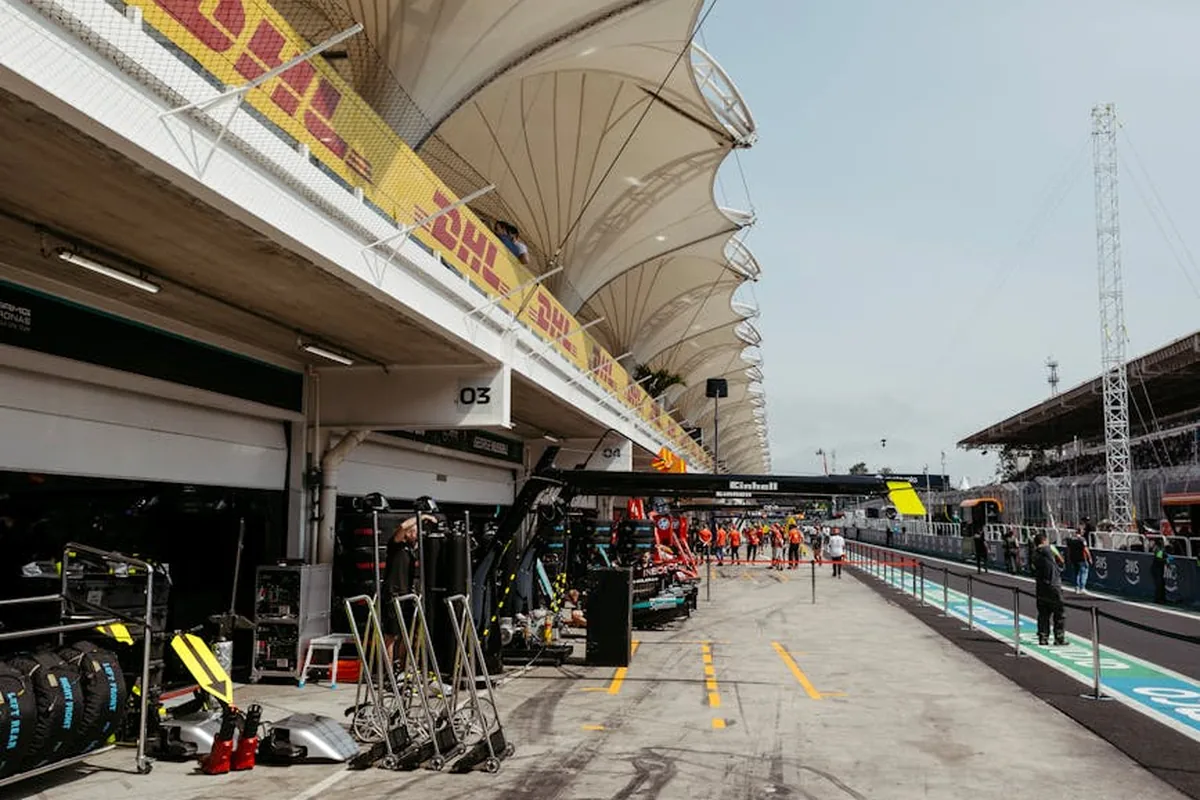
Fuel Management Insights for Silverstone
Fuel management is a critical, high-stakes chess match within the broader strategy of a Formula 1 race. At the Silverstone Circuit, with its unique blend of high-speed corners and full-throttle sections, mastering fuel consumption is a decisive factor between victory and defeat. Teams must balance the need for maximum performance with the strict 110kg race fuel limit, a task that requires deep insight into the circuit's specific demands and real-time adaptability.
The Fuel Consumption Challenge of Silverstone's Layout
Silverstone is one of the most fuel-hungry circuits on the F1 calendar. The reason lies in its aerodynamic profile. A significant portion of the lap is spent at full throttle, demanding high fuel flow from the power unit. Corners like the high-speed Maggotts-Becketts-Chapel complex, while not heavy on braking, require sustained high engine loads to maintain downforce and momentum. This contrasts with tighter, stop-start circuits where fuel is saved under braking and low-speed corners.
The evolution of the track layout has further amplified this challenge. Modern modifications, such as the Arena section, introduced more technical, slower-speed corners which actually increase fuel consumption due to more acceleration events from lower speeds. Understanding this historical context is key; for a deeper look at how these changes affect racing, see our analysis on How Silverstone Circuit Has Changed: Major Modifications Through History.
Strategic Variables Influencing Fuel Strategy
Creating a fuel plan for the British Grand Prix is not a one-size-fits-all equation. Several dynamic factors force teams to build in contingency margins, typically around 1-2% of the total fuel load.
Weather Conditions
Weather is perhaps the most volatile variable. Cooler temperatures increase air density, improving engine power but also increasing fuel consumption. Conversely, hot weather can lead to fuel evaporation losses. Rain, a frequent visitor to Silverstone, completely reshapes the strategy. A wet race requires more fuel for safety car periods, additional engine mapping for wheel spin control, and potentially longer race times. The impact of local weather is so profound we've dedicated a full guide to it: How Weather Affects Racing at Silverstone: Rain, Wind & Temperature.
Race Pace and Traffic
Fuel consumption is directly proportional to race pace. Leading a clean race with minimal aerodynamic drag from other cars is the most fuel-efficient scenario. Fighting through traffic, however, involves repeated bursts of overtaking power and higher engine modes, which dramatically increase fuel usage. A car stuck in a midfield train will consume its reserves much faster than one running in free air.
Safety Car Deployments
A Safety Car period is a double-edged sword for fuel strategy. While it saves a massive amount of fuel as cars circulate at reduced speed, it also prolongs the race distance in terms of time, potentially negating those savings. Teams must instantly recalculate their burn rates and may instruct drivers to engage in extreme fuel-saving techniques, known as "lift and coast," even under Safety Car conditions to build a buffer for a sprint to the finish.
The Engineering and Driver Partnership
Efficient fuel management is a symphony played by engineers and drivers. It begins with the Silverstone Car Setup Guide: Technical Requirements for Fast Laps, where a low-drag configuration can inherently improve fuel mileage, albeit often at the cost of cornering downforce.
During the race, the driver becomes the primary actuator of the strategy. Engineers monitor real-time fuel flow data and communicate target lap times or delta gaps to manage the energy budget. Drivers execute this through techniques like:
- Lift and Coast: Lifting off the throttle early before a braking zone, using engine braking to slow the car marginally, thus saving fuel.
- Engine Mode Management: Switching to less aggressive power unit settings during stable race phases.
- Minimizing Wheel Spin: Smooth throttle application out of corners, especially important in Silverstone's often changeable conditions.
This partnership is audible in our Silverstone Team Radio Communications: Strategy Revealed, where fuel numbers are a constant topic.
Data Analytics and Simulation
Modern fuel strategy is built on a foundation of big data. Teams run thousands of simulation laps before arriving at the circuit, modeling every possible race scenario with different fuel loads, tyre compounds, and weather patterns. These simulations help determine the initial fuel load, which is always more than the minimum estimated requirement.
During practice sessions, teams collect critical real-world data on fuel consumption for various engine modes and aerodynamic configurations. This allows them to refine their models and create a highly accurate fuel burn map for the race. The role of data is so pivotal that it warrants its own exploration in our article on How Data Analytics Shapes Silverstone Race Strategy.
The Regulatory Framework and Future Trends
The FIA strictly regulates fuel flow and quantity. The current power units are governed by a maximum fuel flow rate of 100kg/hour, with the total race fuel not to exceed 110kg. Teams must carefully manage their flow rate to maximize power output within this limit, especially during qualifying when the engine is run at its peak.
Looking ahead, the push for sustainability in Formula 1 is leading to innovation. The 2026 power unit regulations will mandate the use of 100% sustainable fuels. This shift aligns with broader industry goals and circuits' own environmental programs. For insight into how the venue itself is adapting, read about Silverstone's Sustainability Initiatives: Green Racing Future.
Furthermore, the FIA is a key authority on technical regulations, including fuel. You can explore their detailed sporting and technical regulations on their official FIA Regulations page to understand the full framework teams operate within.
Conclusion: The Invisible Race
While battles for position on the track capture the headlines, a parallel, invisible race of fuel management unfolds on the pit wall and in the driver's cockpit at Silverstone. The circuit's specific characteristics make it a supreme test of efficiency versus performance. Success requires perfect synergy between strategic foresight, accurate data modeling, precise engineering, and disciplined driving. In an era where margins are infinitesimal, the team that best optimizes every gram of fuel at Silverstone often finds itself lifting the trophy, proving that in Formula 1, speed must always be measured against the ultimate limit of energy. For a deeper technical dive into related vehicle performance, resources like the SAE International publications offer valuable engineering perspectives on powertrain efficiency.