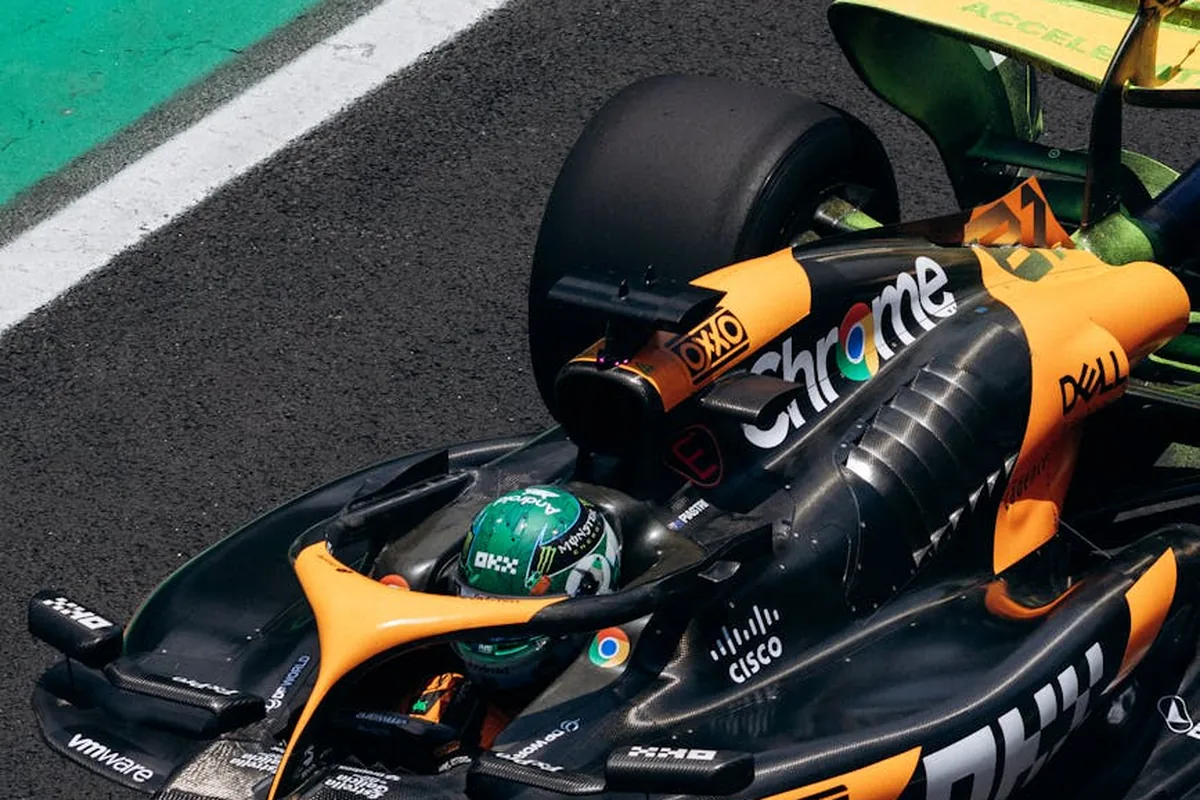
Braking Point: Technical Analysis of Brake Wear at Silverstone
The Silverstone Circuit is a supreme test of a Formula 1 car's entire performance envelope, but few components are punished as severely as the braking system. The combination of high-speed straights and heavy, complex braking zones creates a unique and extreme thermal management challenge. Understanding brake wear at Silverstone is not just about component longevity; it's a fundamental pillar of race strategy, car setup, and ultimately, driver confidence under the immense forces of deceleration.
The Circuit's Unique Demands on Braking Systems
Silverstone’s modern layout, a blend of historic sweeps and modern technical sequences, is deceptively brutal on brakes. The primary factors contributing to extreme brake wear are speed, sequence, and aerodynamic load. Cars approach braking zones from some of the highest speeds on the F1 calendar, particularly at the end of the Hangar Straight. This means kinetic energy—which the brakes must convert into heat—is exponentially greater.
Furthermore, the circuit features several consecutive heavy braking events, such as the sequence from Stowe (Turn 15) through Vale (Turn 16) and into Club (Turn 17). This gives the carbon brake discs and pads little time to cool between applications, causing heat to soak into the system and accelerating wear. The Silverstone Track Layout: Corner-by-Corner Analysis details these demanding sections. Additionally, the high-speed corners like Copse and Maggotts/Becketts generate enormous downforce, increasing the load on the tires and brakes when the driver finally does slow the car.
Technical Breakdown: How F1 Brakes Cope
Formula 1 braking systems are masterpieces of material science and thermal engineering. At their heart are carbon-carbon composite discs and pads, materials chosen for their ability to operate efficiently at extreme temperatures—often between 500°C and 1,200°C.
Disc and Pad Wear Mechanisms
Wear at Silverstone occurs through several mechanisms. Abrasive wear happens as the pad material grinds against the disc. More critically, oxidative wear occurs when the super-heated carbon reacts with oxygen in the air, literally burning the material away. The rate of this oxidation increases dramatically with temperature. In a wet race, as explored in How Weather Affects Racing at Silverstone: A Complete Guide, thermal shock becomes a risk if a hot disc is suddenly doused in cold water, potentially causing cracking.
Cooling is King
The single most critical factor in managing brake wear at Silverstone is cooling. Teams spend countless hours in simulation and wind tunnel testing to optimize brake duct design. These ducts channel high-speed airflow directly onto the brake discs and calipers. For Silverstone, teams typically run maximum cooling configurations—larger duct openings—to cope with the high thermal load. This, however, comes at an aerodynamic drag penalty on the straights, a classic performance trade-off. The quest for efficient cooling is a key part of the Silverstone Circuit: Engineering Marvels Behind the Scenes.
Strategic Implications of Brake Wear
Brake performance directly dictates race strategy. Engineers must model wear throughout a stint to ensure brakes remain effective to the pit stop. Excessive wear can lead to:
- Brake Fade: Reduced braking power as pads overheat.
- Increased Pedal Travel: As material wears, more fluid movement is needed.
- Disc Failure: In catastrophic cases, discs can crack or fail completely.
Therefore, brake wear analysis is intrinsically linked to Tyre Strategy at Silverstone: Pirelli's Challenge. A driver managing a fading brake system will often also overwork their tires, locking up under braking and causing flat spots. Teams use detailed telemetry to monitor disc temperatures in real-time, advising drivers on "brake migration"—shifting brake bias to balance wear between front and rear axiles—and recommending cooling laps.
Evolution and Comparison with Other Circuits
Silverstone stands out in the braking severity hierarchy. While circuits like Monaco have more frequent braking events, the lower approach speeds result in less energy dissipation. Compared to a circuit like Monza, which also has high-speed straights, Silverstone’s braking zones are often more complex and sequential, reducing cooling time. The evolution of the track itself has changed brake demands. For instance, modifications to corner profiles and the introduction of new sections have altered the energy inputs into the braking system over the decades, a history detailed in How Silverstone Circuit Has Changed: Major Modifications Through History.
According to analysis from Brembo, an official F1 brake supplier, Silverstone is classified as one of the most demanding circuits on the calendar for brakes. You can read their detailed circuit-by-circuit analysis on the Brembo Formula 1 calendar page, which provides authoritative technical insights into brake demands.
Driver Technique and In-Car Management
Ultimately, the driver is the final controller of brake wear. Smooth, precise braking inputs minimize lock-ups and localized overheating. At Silverstone, the best drivers master a technique of trail-braking—carrying a small amount of brake pressure into the corner—to help rotate the car, but this must be perfectly modulated to avoid excessive wear. Drivers also play a crucial role in cooling, weaving the car on straights to pump air through the ducts or taking a slightly different line to give the brakes a moment to breathe. The intense physical and mental focus required for this is explored in our article on Mind Over Matter: Mental Preparation for Drivers at Silverstone.
The Future: Materials and Regulation
The future of braking at Silverstone will continue to evolve with the sport. While the core carbon-carbon technology is mature, teams constantly seek advancements in carbon matrix composition for better wear resistance and consistent friction coefficients. Furthermore, the increasing role of the hybrid Power Unit and regenerative braking (MGU-K) changes the dynamic. The MGU-K recovers kinetic energy under braking, which actually reduces the pure thermal load on the traditional friction brakes, potentially affecting wear rates. The FIA provides detailed technical regulations that govern brake system dimensions and materials, ensuring a controlled technological environment. For the latest official technical sporting regulations, the FIA's official documentation is the primary source.
In conclusion, brake wear at Silverstone is a complex interplay of physics, material science, strategy, and human skill. It is a critical limiting factor that can define a team's weekend, turning a potential victory into a battle for survival. Success requires perfect harmony between a robust car setup, a clever strategic forecast, and a driver capable of managing this most vital system at the very edge of its capability.