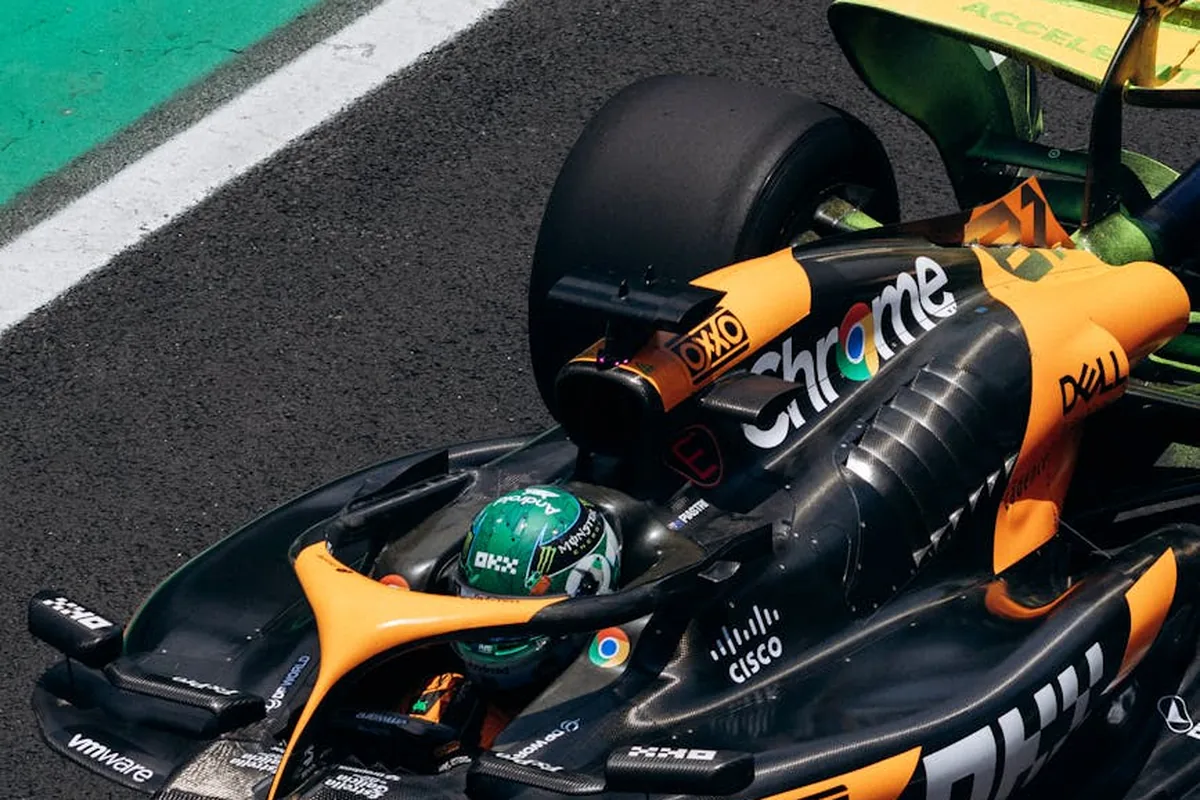
From Classic to Cutting-Edge: Evolution of Cars at the British GP
The British Grand Prix at Silverstone is more than a race; it's a living museum and a high-speed laboratory. Since the first World Championship race in 1950, the machines that have roared around this historic circuit have undergone a transformation so profound it borders on the revolutionary. Tracing the evolution of cars at the British GP is to trace the very history of Formula 1 itself—from rudimentary, front-engined roadsters to the aerodynamic, hybrid-powered marvels of today.
The Pioneering Era: Front Engines and Raw Courage (1950s)
The cars that contested the inaugural 1950 British Grand Prix were a world apart from modern F1. They were essentially modified pre-war grand prix cars or road-going sports cars, with their engines mounted ahead of the driver. Alfa Romeo’s 158 Alfetta, driven to victory by Giuseppe Farina, typified the era: a supercharged 1.5-litre straight-eight producing around 350 bhp, ensconced in a narrow, spidery chassis with rudimentary suspension and drum brakes. Driver skill and physical bravery were the primary performance differentiators, as safety features were virtually non-existent. The circuit's fast, sweeping nature, as detailed in our Silverstone track layout analysis, was a formidable challenge for these relatively fragile machines.
The Rear-Engine Revolution and Aerodynamic Awakening (1960s-1970s)
The 1960s marked the sport's most significant technical shift: the move to rear-mounted engines. Cooper and Lotus pioneered this design, which offered superior weight distribution and handling. By the 1970s, the classic F1 silhouette was born—a wide, low-slung chassis with massive slick tires. Aerodynamics moved from an afterthought to a science. The introduction of wings in the late 1960s, followed by ground-effect underbodies in the late 1970s, transformed cars into inverted aerofoils. Downforce, not just mechanical grip, became king. This era saw legendary battles at Silverstone, with cars like the Lotus 72 and the Ferrari 312T pushing the boundaries of mechanical and aerodynamic design in what many consider a golden era of racing.
The Turbocharged Titans and Active Intervention (1980s-1990s)
The 1980s brought the turbocharging war, with engines like BMW’s 1.5-litre inline-four producing over 1,000 bhp in qualifying trim—an astonishing power-to-weight ratio. Cars became explosively fast but terrifyingly twitchy. This raw power defined iconic 1980s rivalries at Silverstone. The subsequent push for safety and control led to a ban on turbos and the rise of advanced electronics in the 1990s. Semi-automatic gearboxes, traction control, and active suspension turned drivers into system managers. The cars, like the Williams FW14B, were technological masterpieces, achieving incredible levels of grip and consistency. This period was a true technological revolution at Silverstone, setting the stage for the modern era.
The Modern Metamorphosis: Safety, Sustainability, and Hybrid Power (2000s-Present)
The 21st century has been defined by two parallel evolutions: a relentless focus on safety and a shift towards hybrid power. Following tragic events, the FIA mandated drastic safety improvements, leading to cars with stronger survival cells, the Halo device, and advanced impact structures. Concurrently, the engine formula evolved from large, naturally-aspirated V10s to the complex 1.6-litre V6 turbo-hybrid power units introduced in 2014. These units are thermal marvels, recovering energy from exhaust and braking to boost power while improving efficiency.
Today's cars are the most advanced in history. Their aerodynamics are honed in supercomputers and wind tunnels, generating immense downforce from intricate front wings, bargeboards, and rear diffusers. The chassis are carbon-fiber monocoques of incredible strength and lightness. This complex interaction between power, aerodynamics, and tyre strategy defines modern success at Silverstone. Furthermore, this evolution aligns with a broader industry shift, reflected in Silverstone's own sustainability initiatives.
Key Technological Leaps at Silverstone
The evolution can be distilled into several critical technological leaps, each tested and proven on Silverstone's demanding tarmac:
- Engine Placement: Front-engine to mid-engine (1960s).
- Aerodynamics: From clean bodies to wings and ground-effect (1970s).
- Power Units: Naturally aspirated to turbocharged to hybrid (1980s, 2010s).
- Materials: Steel tubing to carbon fiber monocoques (1980s onward).
- Electronics: Manual controls to semi-automatics and driver aids (1990s).
- Safety: Minimal protection to survival cells, Halo, and advanced barriers (2000s onward).
Each change has directly impacted lap times. For a deeper look at how these advancements have translated into ever-faster laps, explore the evolution of the Silverstone lap record.
The Future: What's Next for F1 Cars at Silverstone?
The evolution is far from over. Formula 1's technical regulations continue to evolve with goals of improving racing, sustainability, and cost control. The 2022 regulation overhaul aimed to reduce aerodynamic turbulence, making close-quarters racing and overtaking opportunities more prevalent. The future points towards even greater efficiency, with sustainable fuels set to play a major role. The core mission remains the same as in 1950: to build the fastest racing car within the rules. But the tools, materials, and priorities—speed, safety, and sustainability—have transformed utterly.
This relentless progress is mirrored by the circuit itself. To understand how the track has adapted to host these ever-evolving machines, read about the major modifications to Silverstone Circuit through history. For authoritative insights into current F1 technical regulations and future directions, the official FIA Formula 1 regulations page and analysis from Autosport are invaluable resources.
From the screaming Alfetta to the whispering hybrid, the cars of the British Grand Prix tell a story of human ingenuity, relentless competition, and a perpetual drive to go faster, safer, and smarter. Silverstone's hallowed asphalt has borne witness to it all.